


Getting your building fire safe isn’t just smart, it’s the law. Whether you’re a commercial property owner, a strata manager, or a developer wrapping up a new build, you’ll need to obtain a fire safety certificate before occupancy. But navigating the process can feel overwhelming if you’re not sure where to begin.
In this guide, we’ll walk you through exactly how to obtain a fire safety certificate, what you need to know, and where to find help if you need it.
What is a Fire Safety Certificate and Why Do You Need One?
A fire safety certificate is a legal document issued by the building owner confirming that all required fire safety measures have been installed, tested, and assessed in accordance with Australian Standards. It plays a vital role in demonstrating compliance with local regulations.
In New South Wales, submitting this certificate to your local council and Fire and Rescue NSW is mandatory before any building can be occupied. It proves your premises are compliant, operational, and most importantly, safe for people to use.
If you’re unsure of the specific fire safety measures your building requires, the NSW Planning Portal provides a clear breakdown based on property type.
How to Obtain a Fire Safety Certificate: A Step-by-Step Breakdown
Securing a fire safety certificate involves a few key stages. The process isn’t complicated when you understand what’s involved, especially with a qualified provider like Be Sure Fire in your corner.
- Identify Essential Fire Safety Measures
These can include exit signs, smoke alarms, emergency lighting, fire extinguishers, hydrants, and more. Your development consent or construction certificate will list which ones apply to your building.
- Engage Accredited Practitioners (Fire Safety)
Fire safety systems must be inspected by qualified professionals listed on the FPAS accreditation register. These experts ensure each system meets performance standards and has been installed correctly.
- Conduct Inspections and Testing
Systems are tested and verified in line with the guidelines outlined in Australian Standard AS 1851, which covers routine service of fire protection systems and equipment.
- Complete the Fire Safety Certificate
Once all fire systems pass inspection, the building owner signs and issues the certificate. Templates and requirements are available via the NSW Government Planning website.
- Lodge the Certificate
Submit the completed document to your local council, display a copy prominently in the building, and send it to Fire and Rescue NSW. Only then is the building legally occupiable.
If you’re feeling unsure, FPA Australia’s step-by-step guide is a helpful reference tool for building owners and managers.
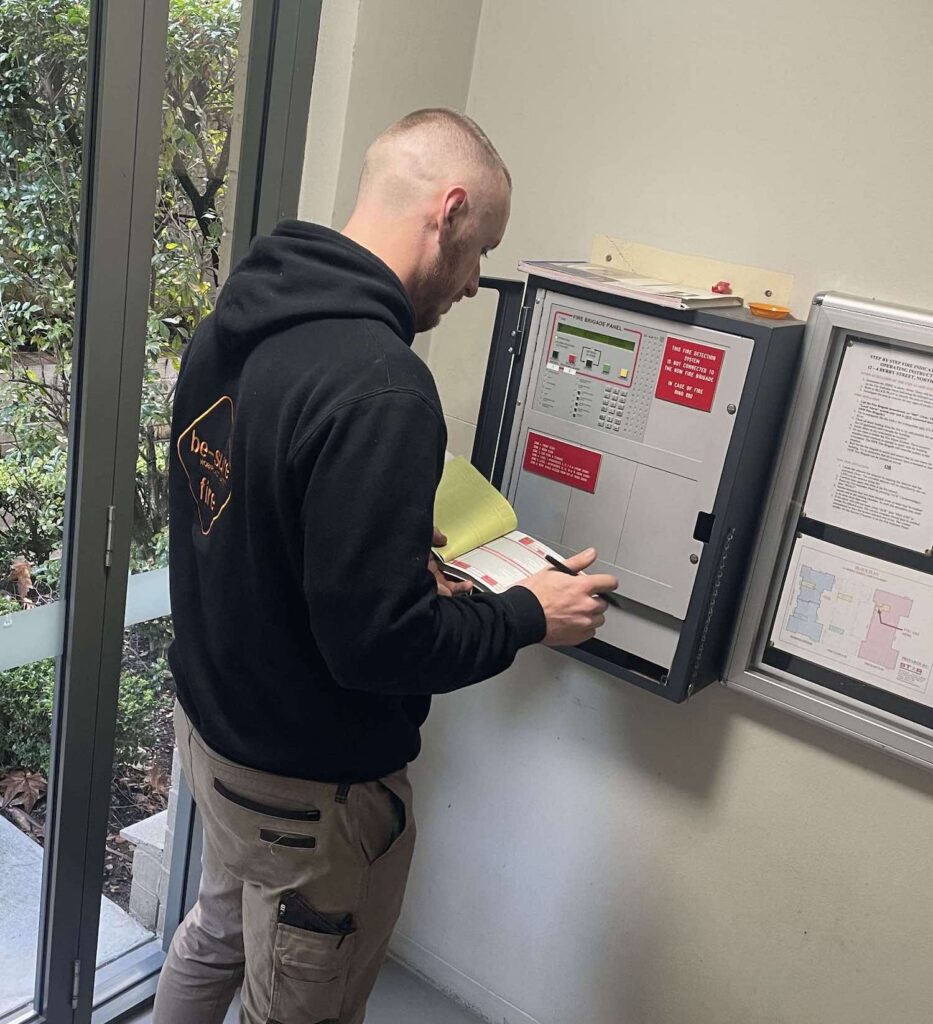
Who Can Issue a Fire Safety Certificate in NSW?
In NSW, only the building owner can formally issue and sign a fire safety certificate. However, they must rely on accredited fire safety practitioners to carry out all necessary inspections, testing, and assessments.
Choosing qualified professionals from the FPAS register ensures your systems are inspected by those with the proper training and experience.
At Be Sure Fire, we partner with trusted, accredited technicians so you can confidently meet certification requirements without any guesswork or delays.
How Long is a Fire Safety Certificate Valid?
A fire safety certificate is a once-off document issued upon the installation of new fire safety measures, typically after a new build or significant refurbishment. However, it doesn’t stop there.
After the certificate is issued, you’re required to submit an Annual Fire Safety Statement (AFSS) every 12 months. This statement confirms all fire systems remain compliant, have been routinely tested, and are still functioning properly.
If you skip or delay your AFSS, there can be serious consequences. The NSW Fire and Rescue website outlines penalties, including fines or legal orders, for failing to meet ongoing obligations.
With a trusted provider like Be Sure Fire, keeping up with your certification timeline becomes a breeze. We manage ongoing testing, documentation, and reminders so you’re never caught off guard.
What Happens If Your Building Doesn’t Comply?
If your fire safety measures fall short of required standards, you won’t be issued a certificate until all problems are rectified. And unfortunately, non-compliance can lead to more than just red tape.
You might face:
- Occupancy delays for new builds or renovated properties
- Orders from the council to carry out urgent upgrades
- Increased insurance premiums, or worse, a voided policy
- Legal action in the event of an incident
Fortunately, with the right support and advice, getting back on track isn’t difficult. Providers like Be Sure Fire specialise in diagnosing non-compliance issues and delivering fast, reliable solutions, especially for property owners across the Central Coast.
The Smart Way to Stay Compliant Year After Year
The easiest way to avoid fire safety headaches? Take a proactive approach. Regular maintenance and expert advice can help you stay compliant without lifting a finger.
At Be Sure Fire, we take ownership of your fire safety needs, offering:
- Ongoing inspections and testing based on AS 1851
- AFSS management and documentation
- Support navigating council requirements
- Quick, effective upgrades where needed
We’re not just here to tick boxes, we’re here to build long-term relationships with our clients. That’s why Central Coast property owners trust us to handle fire safety with a mix of professional precision and personal care.
Ready to Get Certified?
How do I obtain a fire safety certificate? With the right advice and trusted support, the process becomes clear, fast, and stress-free.
Whether you’re finalising a construction project or just making sure your existing building meets requirements, Be Sure Fire is here to help. We offer reliable inspections, expert guidance, and personalised service that puts your safety first.
Contact us today to organise your fire safety certification, and get peace of mind that everything’s in order.